


Deploying tens of thousands of coral seeding devices across the Great Barrier Reef in a single season sounds like a field operations challenge. It is, but the process begins much earlier, in a facility on the coast of Townsville, inside tanks where temperature, light, salinity and pH management provide important research inputs to this expansive coral seeding programme.
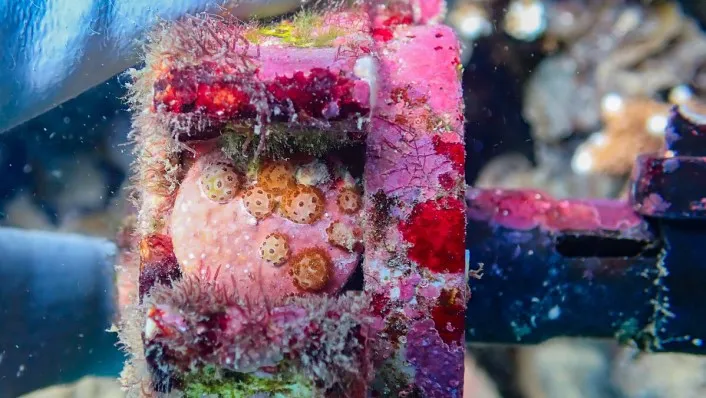
In the 2025-26 season, the Australian Institute of Marine Science’s Pilot Deployments Program placed 44,608 coral seeding devices across three reef sites off Cairns and in the Keppel Islands. Each device carried up to ten juvenile corals, reared through conservation aquaculture at AIMS’ National Sea Simulator (SeaSim) before being transferred to the reef. Around 130 people were trained across the programme; an estimated 14.6 million coral eggs were collected during the spawning season. The logistics were considerable. But what made it all possible was over a decade of prior investment in infrastructure that could support research into coral rearing at this scale and assist in developing deployment techniques.
What SeaSim actually requires
Described as the ‘smartest aquarium in the world’, the SeaSim was purpose-built for research. The development of finely controlled and flexible environmental parameters across multi-stream systems made its seawater management one of the most complex design challenges of its kind anywhere in the world.
The numbers give a sense of the scale: 3 million litres of filtered seawater per day at full capacity, 3.65 million litres of bulk storage across storage ponds and tank farms, almost 30 kilometres of plumbing, over 40 pumps, and more than 30 seawater processing tanks. Across all of this, the facility maintains the ability to independently manipulate light, temperature, pH, CO₂, salinity, and sediment loads — the combination that allows researchers to induce coral spawning outside its natural annual window, which matters enormously when you’re trying to build an aquaculture supply chain that can’t wait for a single October event.
Oceanis International has valued our long involvement with AIMS and the SeaSim, from its inception, operational evolution, and more recently through its expansion. Back in 2010 when Oceanis first began working on the SeaSim design, in close collaboration with AIMS researchers and management, we undertook an extensive analysis of local water quality. With the facility drawing seawater directly off the coast south of Townsville, the characteristics of the water source shaped the entire facility development. The resulting infrastructure includes seawater intakes, world-leading membrane filtration, raw water distribution systems, salinity correction, bulk storage, disinfection, discharge, laboratory gas systems, extensive monitoring and data collection capability, and multiple streams of high-accuracy thermal control across water of varying quality and composition.

The engineering challenge was not just on any single component. It was also in making all of them work together, reliably, for organisms sensitive to water quality condition fluctuations that wouldn’t register in most industrial settings.
What it means for facilities supporting conservation science
The AIMS programme illustrates an issue that becomes more apparent as marine conservation ambitions scale up: the constraint is not necessarily the science. Researchers now know how to spawn corals of many species, raise larvae, and design devices that protect juveniles from grazing fish. Scaling coral seeding over the vast areas of the Great Barrier Reef is a great challenge which the Pilot Deployments Programme is dedicated to researching through the advancement of marine science, and the SeaSim plays an important part.
SeaSim’s expansion, completed in stages from 2024, more than doubled the size of the original facility and supports initiatives such as the Pilot Deployments Programme, continuing the important investment in infrastructure that aids in understanding and improving the feasibility of using reef restoration tools at scale on the Great Barrier Reef.
Does your institution use marine research infrastructure? Join the discussion.